Sometimes I know exactly what I need to report, but I still struggle to turn it into a clear piece of writing.
What happened?
What is the current situation?
What needs to happen next?
The necessary information may already be in my head, but arranging it in the right order can take more time than expected.
I am a Japanese professional in my 50s.
Through many years of work, I have learned that a useful report does not need impressive language.
What matters is clearly separating the facts, unresolved issues, and next actions.
That experience now helps me decide how to use AI responsibly.
I do not ask AI to decide what should be included in my report.
I use it to turn my own rough notes into clearer writing.
I decide the facts.
AI helps organize the wording.
Keeping those roles separate allows me to use AI without giving up responsibility for my work.
You Do Not Need to Write a Perfect First Draft
When I try to write a work report, I sometimes get stuck on the first sentence.
I want the wording to sound professional.
I want to avoid mistakes.
As a result, I begin worrying about the writing before I have organized the information.
I used to try to write a complete report from the beginning.
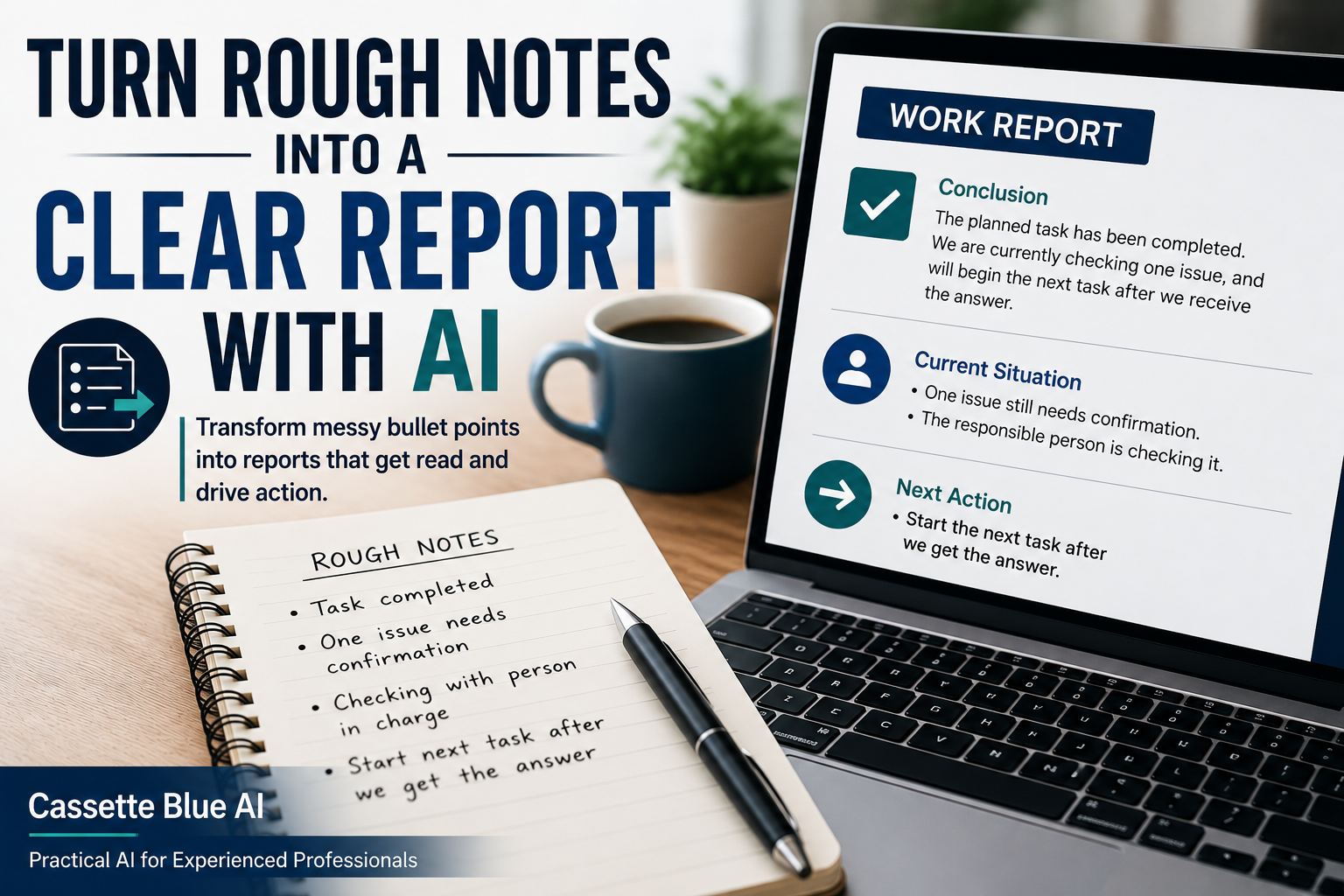
Now I start with bullet points.
For example:
- The planned task has been completed
- One issue still needs confirmation
- The responsible person is currently checking it
- The next task will begin after the answer is received
The wording does not need to be polished at this stage.
The first priority is not elegant writing.
It is accurate information.
Once I have listed the facts, I ask AI to organize them into a clear report.
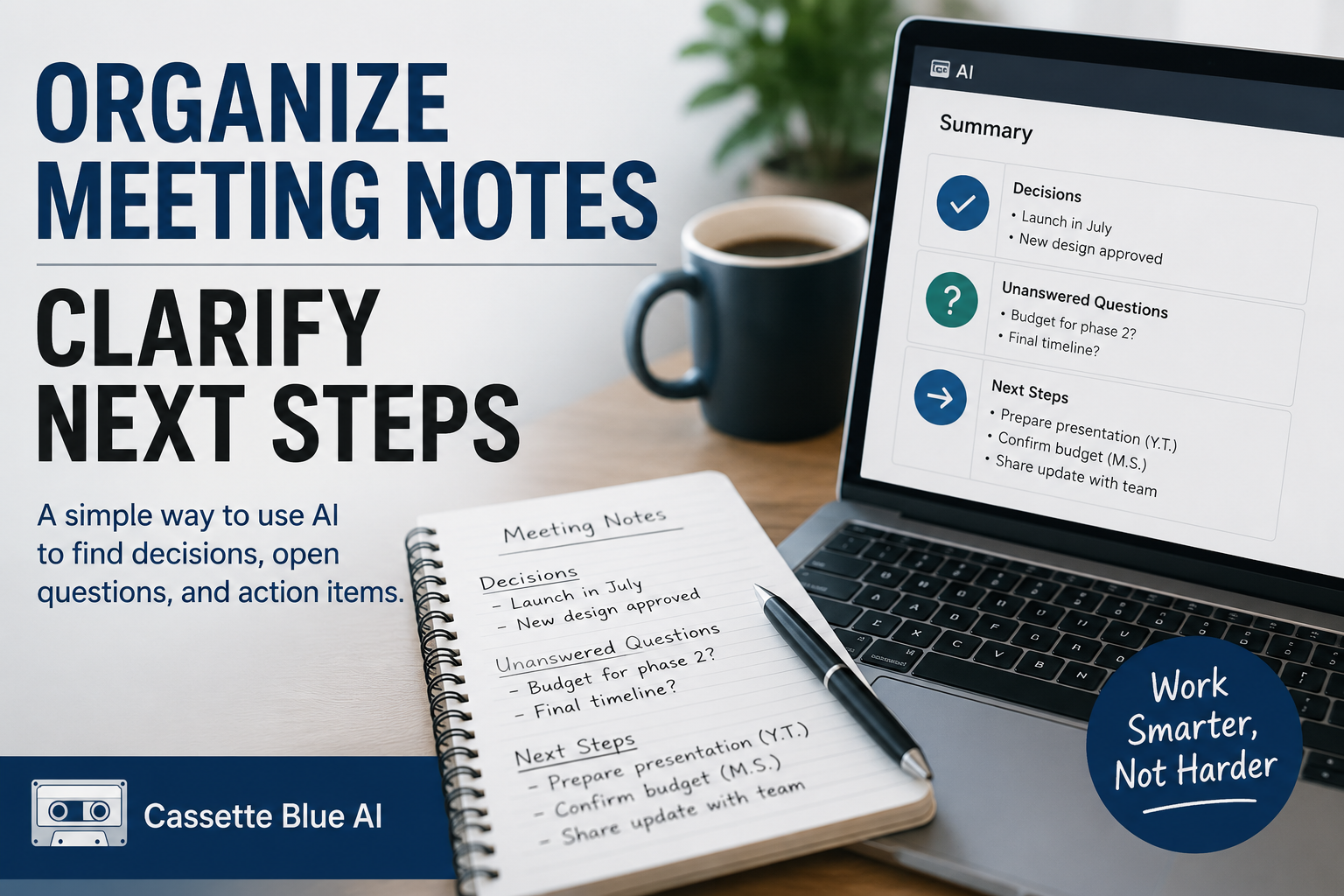
If your rough notes came from a meeting, you can first organize the meeting notes and clarify the next steps.
Tell AI Who the Report Is For
The same information may need different wording depending on the reader.
A report to a manager is different from an update to a colleague.
A message to a customer may require even more careful wording.
In Japanese workplaces, the level of formality often changes depending on position, seniority, and whether the recipient is inside or outside the company.
But this is not only a Japanese issue.
In any country, the appropriate tone depends on the relationship and the purpose of the message.
That is why I give AI a short explanation of the audience and the goal.
For example:
Please turn these bullet points into a short work report for my manager. Put the conclusion first, and make the current situation and next action easy to understand.
This helps AI create a report rather than simply connect the bullet points into longer sentences.
I also add one important instruction:
Do not add any information that is not included in the bullet points.
AI should organize the facts.
It should not invent them.
The same approach can also help you improve work emails without losing your own voice.
Ask AI to Put the Conclusion First
A work report is usually easier to read when the current situation appears near the beginning.
But when writing without help, people often explain events in the order they happened.
The reader may need to reach the final paragraph before understanding the main point.
In Japanese workplaces, trying to be especially careful or polite can sometimes push the conclusion even further down the page.
AI can help reorganize the structure.
I may ask:
Explain the current situation in the first sentence. Then describe the reason and the next action.
This creates a clearer order:
What happened?
What is the current situation?
What will happen next?
If I want the report to be shorter, I add:
Use three short paragraphs.
The instruction does not need to be complicated.
It only needs to make the purpose clear.
Do Not Use the AI Version Without Reviewing It
An AI-generated report may look polished.
But a polished report is not automatically an accurate report.
AI may rewrite an unresolved issue as if it has already been decided.
It may describe a possible plan as a confirmed action.
I mainly check two things.
The first is whether the facts have changed.
The second is whether responsibility has changed.
Who is checking the issue?
Who will make the decision?
Who is responsible for the next action?
If those details change, the report may create confusion or even cause a workplace problem.
AI can improve readability.
I remain responsible for the facts and the people involved.
Years of professional experience are not a disadvantage when using AI.
That experience helps me notice when the tone, facts, or responsibilities do not feel right.
Do Not Enter Confidential Information
Work reports may include company names, customer names, prices, contracts, or internal business details.
When using a public AI tool, I remove information that is not necessary.
I may replace a company name with Company A.
I may replace a customer name with Client.
I may replace a personal name with Manager or Team Member.
AI needs enough structure to improve the writing.
It does not need real names or confidential details.
If my employer has rules about AI use, I follow those rules first.
The goal is not to use AI simply because it is convenient.
The goal is to use it only in situations where I can remain responsible for the result.
Start With an Old Report
You do not need to test this method on an important report you are about to submit.
Choose a short report you wrote in the past.
Remove any personal or confidential information.
Turn the main points back into bullet points.
Then ask AI:
Please turn these bullet points into a short work report for my manager. Put the conclusion first, and clearly separate the current situation from the next action. Do not add any information that is not included.
Compare the result with your original report.
Which version is easier to understand?
Have any facts changed?
Does the wording still sound like something you would write?
You do not need to use the AI version.
Simply comparing the two versions will show you where AI is useful and where human judgment is still necessary.
Keep Responsibility for the Report
AI can reduce the time needed to turn rough notes into readable writing.
But it should not decide what needs to be reported.
The important facts.
What the reader needs to know.
What action should happen next.
Those decisions must come from someone who understands the work.
I do not think of this as asking AI to write my report for me.
I am using AI to organize a report that is still based on my own judgment.
The professional experience I have gained in a Japanese workplace remains the foundation.
I do not need to throw away that experience in order to use AI.
In fact, that experience is what allows me to judge whether the AI-generated report is accurate, appropriate, and responsible.
If you prefer a structured way to build these practical skills, explore AI courses for experienced professionals.
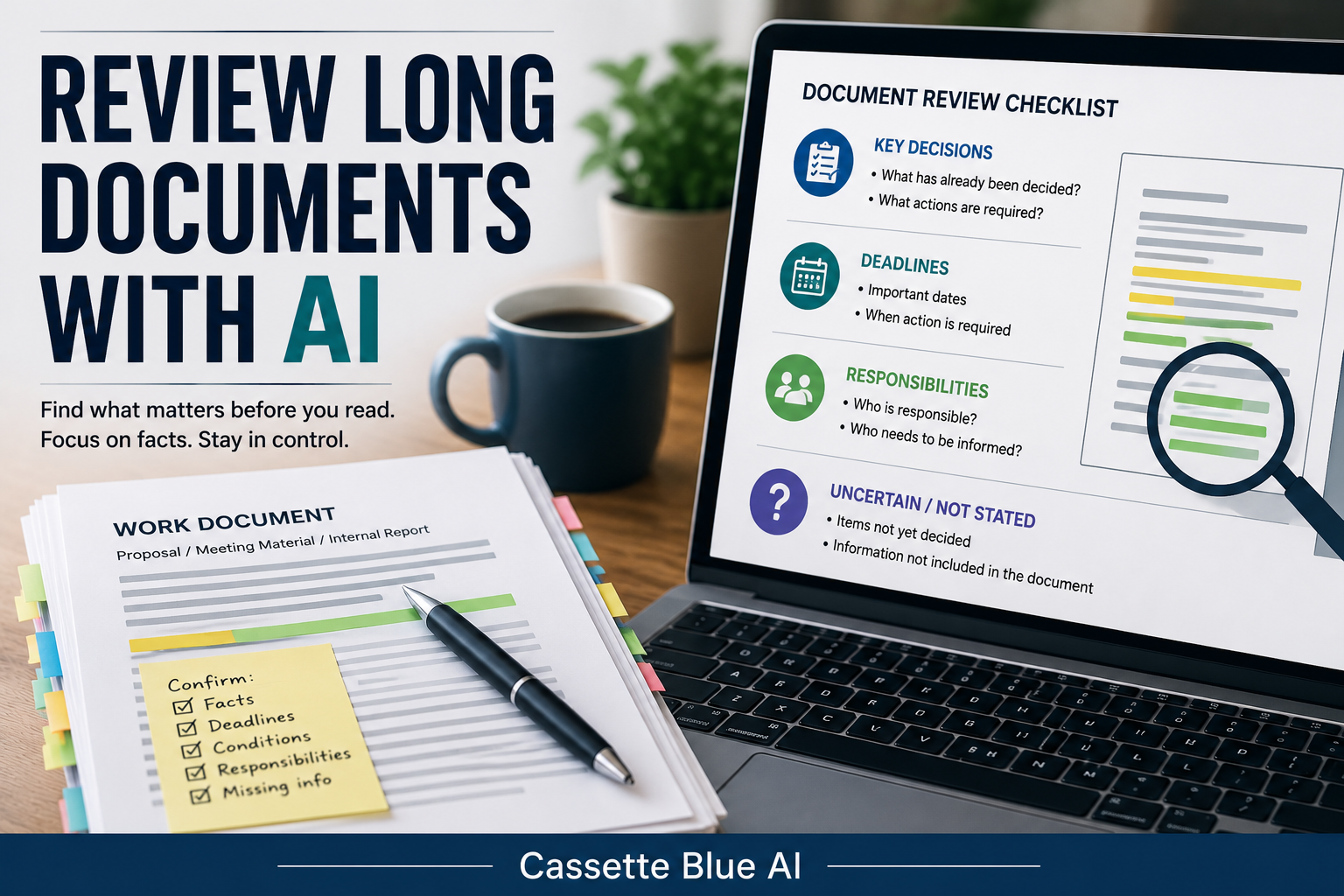
Before writing a report, learn how to review a long work document with AI and identify the details that need your attention.
I decide the facts.
AI helps organize the writing.
Responsibility for the report remains with me.
コメント