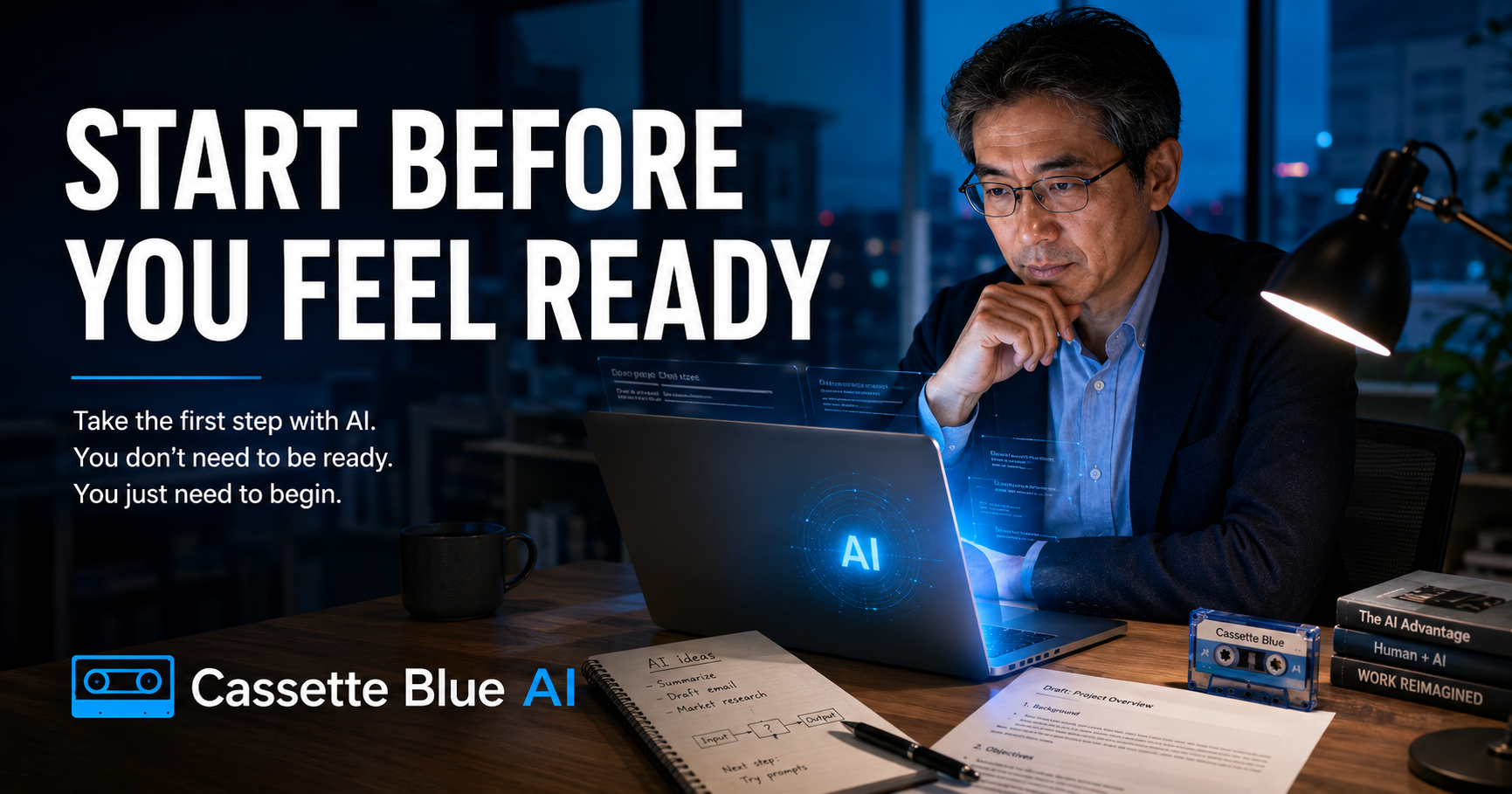
Before I started using AI, I thought I needed to learn more first.
What exactly was AI?
Which tool should I choose?
What was the correct way to use it?
I believed I should understand the basics before bringing AI into my work.
But the more I researched, the more new terms and tools appeared.
By the time I understood one feature, another one was already being discussed.
I realized that if I waited until I felt fully prepared, I might never begin.
So I changed my approach.
I stopped trying to understand AI before using it.
Instead, I started using it for small tasks and learning through experience.
- Experienced Professionals Often Wait Too Long
- I Also Thought I Needed More Knowledge
- Start with Work You Already Understand
- Using AI Is Part of Learning AI
- You Do Not Need to Learn as Fast as Younger Colleagues
- Your First Goal Is Not Mastery
- Experience Helps You Use AI Safely
- There Are Still Important Boundaries
- One Small Step You Can Take Today
- You May Never Feel Completely Ready
Experienced Professionals Often Wait Too Long
After many years at work, you learn to prepare carefully.
You check whether information is accurate.
You think about who may be affected.
You consider whether you can explain your decision if something goes wrong.
That sense of responsibility is valuable.
But when learning AI, the same careful attitude can delay the first step.
If you try to understand everything before beginning, the starting point keeps moving.
AI changes quickly.
New tools appear.
Existing tools add new features.
The goal should not be perfect preparation.
The goal should be finding one small task you can test safely.
I Also Thought I Needed More Knowledge
I am a Japanese professional in my 50s.
I have many years of work experience, but I am not an AI expert.
When I first started, I worried about asking the wrong questions.
I wondered whether AI would be useless if I could not give perfect instructions.
I thought I should study the basics first.
But AI is not an examination.
You do not need to create the perfect question on your first attempt.
If the answer is unclear, you can ask again.
If the explanation is too difficult, you can ask for simpler language.
If the result is not useful, you can change the request.
I learned more from trying AI than from waiting to feel ready.
If asking younger colleagues basic AI questions feels uncomfortable, you can also read how I began learning AI privately.
Start with Work You Already Understand
Using AI does not mean giving it responsibility for important decisions.
You do not need to begin with official reports, customer proposals, or sensitive business documents.
Start with something small.
Choose a task where a mistake would not create a serious problem.
I began by using AI to organize my thoughts.
I entered rough ideas and asked how they could be arranged more clearly.
I did not copy the answer directly.
I used it as a starting point.
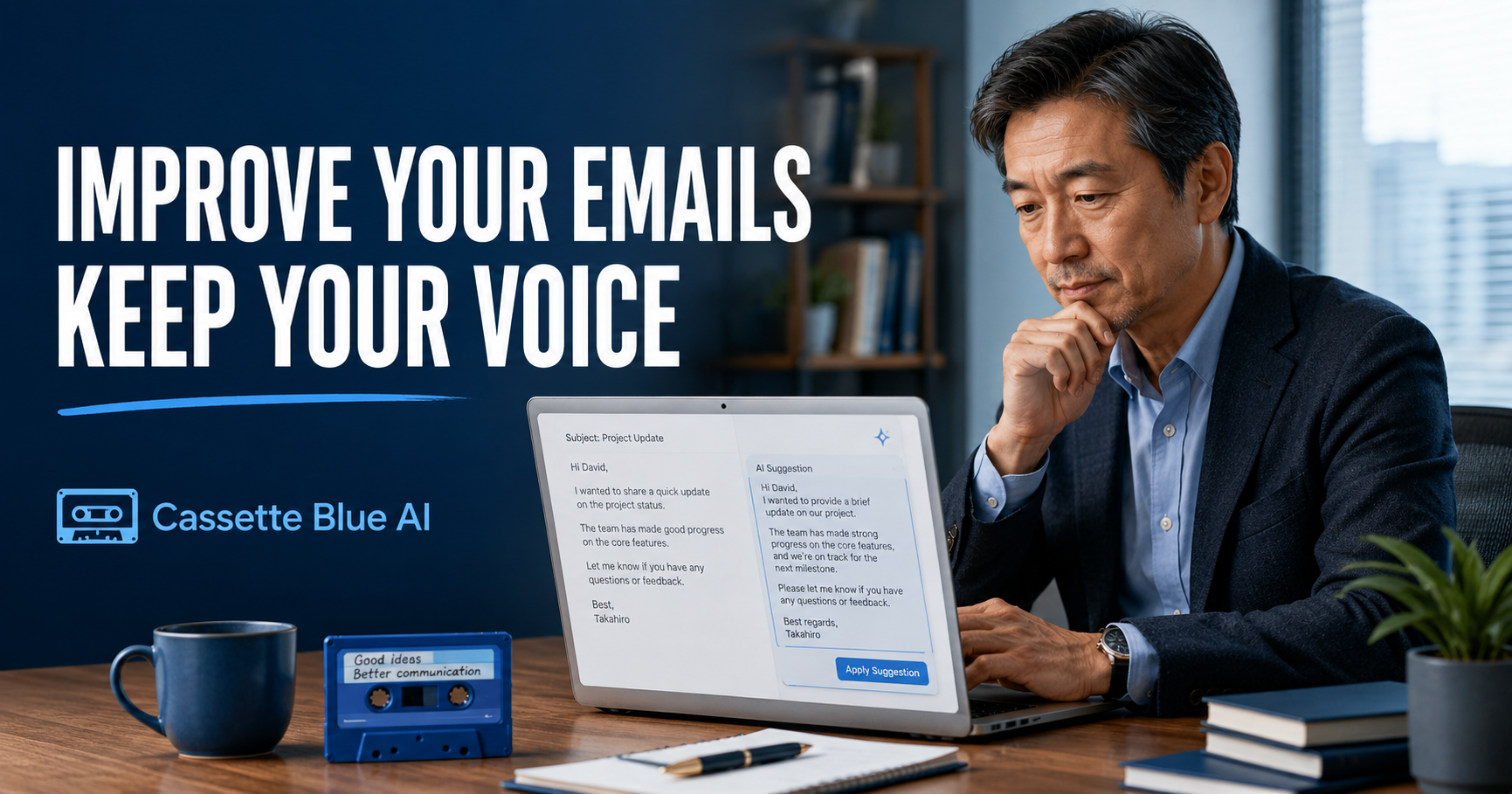
Later, I asked AI to improve an email I had already written.
I understood the message.
I knew the facts.
I knew the relationship between me and the recipient.
That made it easier to notice when the AI used the wrong tone or created an unnatural sentence.
The safest place to begin is with work you already understand well.
Using AI Is Part of Learning AI
You can read explanations about AI.
You can watch tutorials.
You can study common terms.
But it is difficult to understand how AI fits into your own work without actually using it.
Practice teaches you things that theory cannot.
You begin to notice:
- Which questions produce useful answers
- Which tasks AI can support
- Which decisions still require human judgment
- What kinds of mistakes AI tends to make
You do not use AI after you are fully prepared.
Using AI is part of becoming prepared.
You can also explore AI courses for experienced professionals if you prefer a more structured way to learn.
You Do Not Need to Learn as Fast as Younger Colleagues
When you begin using AI, younger employees may appear to improve faster.
They may test new features immediately.
They may feel comfortable using unfamiliar tools.
They may already know the names of platforms you have never heard of.
You do not need to learn at the same speed.
Experienced professionals have different advantages.
You understand where time is being wasted.
You know which tasks are repetitive.
You know which decisions carry real responsibility.
Knowing many AI features is less important than knowing where AI can genuinely help your work.
One useful feature applied well can be more valuable than knowing ten tools you never use.
Your First Goal Is Not Mastery
Trying to use AI perfectly from the beginning can create another source of stress.
You may start wondering whether your prompt was good enough.
You may worry that you should be using a different tool.
You may compare your results with people who have been experimenting for much longer.
That can make AI feel like extra work.
Your first goal is not mastery.
Your first goal is familiarity.
Ask a simple question.
Read the answer.
Correct what is wrong.
Use only the parts that are helpful.
Ignore the rest.
AI will not produce an excellent result every time.
What matters is learning how to recognize what is useful and what is not.
Experience Helps You Use AI Safely
Learning AI requires new knowledge.
But it does not require you to abandon what you already know.
If you understand the work, you are more likely to notice an incorrect answer.
If you understand the people involved, you can adjust the tone.
If you understand the purpose of the task, you can decide whether the AI’s suggestion is relevant.
Experience is not a disadvantage.
It is the foundation that helps you use AI carefully.
AI can generate ideas quickly.
Experience helps you decide which ideas deserve attention.
There Are Still Important Boundaries
Starting before you feel ready does not mean using AI carelessly.
Do not enter confidential company information into a public AI tool without permission.
Do not include private customer information.
Do not allow AI to make important decisions on its own.
Always review the result.
Check important facts.
Follow your employer’s rules.
Starting small is responsible.
Ignoring risk is not.
One Small Step You Can Take Today
Choose a short piece of writing you have already created.
It could be an email, a short explanation, or a paragraph from a report.
Then ask AI:
Please make this clearer without changing the meaning.
Read the result carefully.
You do not have to use it.
Your original version may be better.
Perhaps only one sentence is useful.
That is enough.
Using AI does not mean handing over your work.
It means adding another option to the way you work.
You May Never Feel Completely Ready
AI will continue to change.
New tools will continue to appear.
You may never reach a point where you feel that you understand everything.
That is normal.
Do not wait for complete confidence.
Find one small task that feels safe.
Try it.
Review the result.
Make corrections.
Then try again.
Over time, AI becomes less like a complicated technology and more like an ordinary tool.
I did not begin using AI because I had become an expert.
I began using it, and that is how I slowly started to understand it.
You do not need to know everything before you begin.
You can bring your existing experience with you and start with one small task.
When you are ready to try one practical task, learn how I use AI to improve work emails without losing my own voice.
Do not wait until you feel ready.
Use AI in small ways and learn by reviewing the results.
Your experience is the foundation, not the obstacle.

コメント